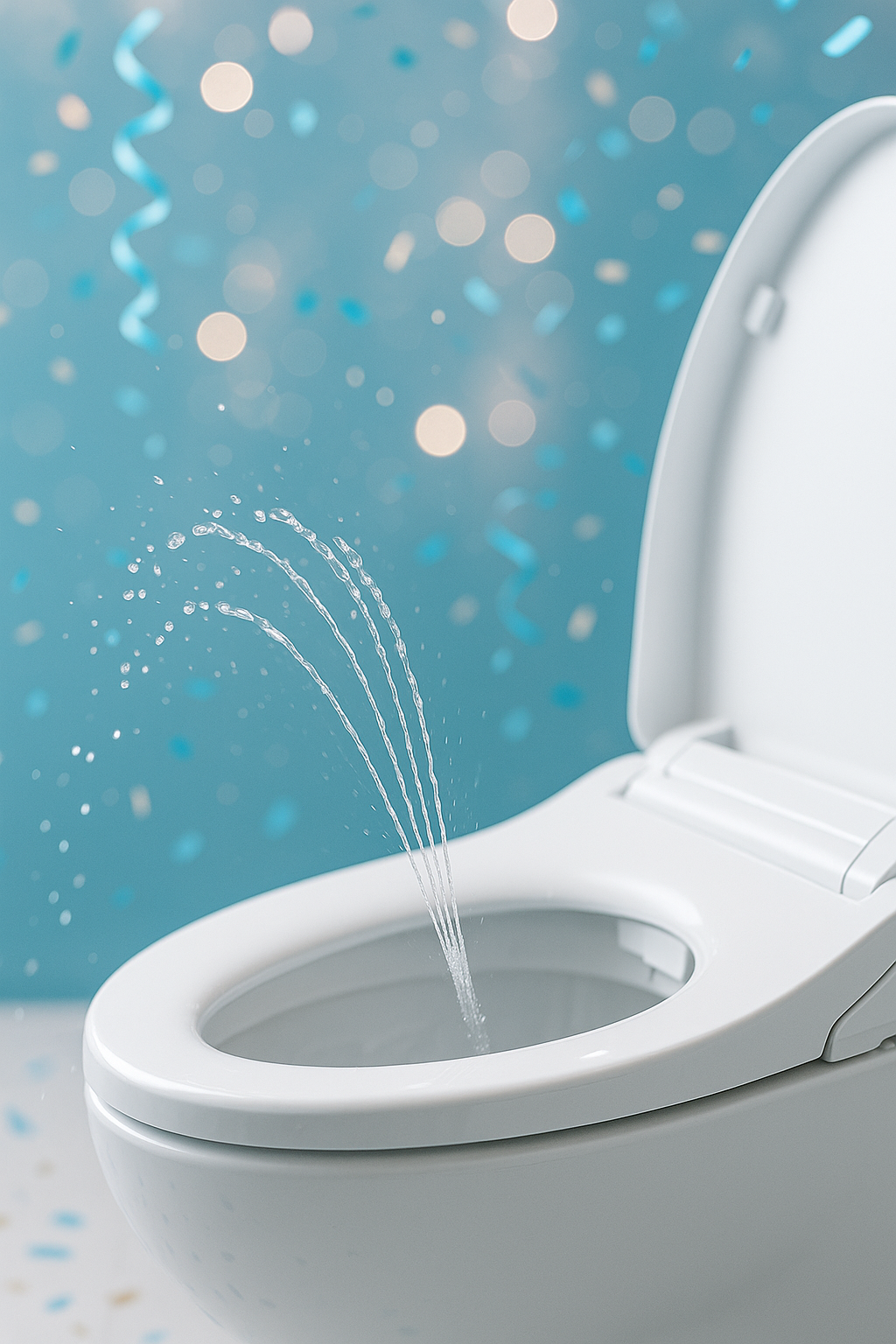
Are bidets sanitary?
Yes. For a home bidet you keep reasonably clean, you end up cleaner than you were with paper alone. Water rinses. Paper smears. The nozzle doesn't touch you, it sprays from a few inches away and then tucks itself out of the way the rest of the time, like a shy little robot. The legitimate concerns aren't about your own bidet at all. They're about shared and hospital units nobody cleans, and about a few specific groups who should use it gently. Here's the unglamorous full version, which is the only version I know how to give.
TL;DR
- A bidet rinses with water instead of smearing with dry paper, which is why most people end up cleaner, not dirtier.
- The nozzle never touches you. It extends from under the seat, sprays from a distance, retracts, and most electric models rinse it before and after each wash (BidetKing).
- "Self-cleaning" is not "never-cleaning." Wipe the nozzle down yourself now and then.
- The real research worries are about shared and hospital bidets that go uncleaned (Healthline), not a well-kept seat at home.
- If you have a vulva, aim front-to-back, and don't blast yourself with scalding water on a high setting out of enthusiasm.
Does the nozzle touch you? (No, and that's the whole design)
This is the fear underneath most of the others: that a bidet is a damp wand making contact where you'd rather it didn't. It isn't. I promise. I have thought about this more than any person should.
On an electric seat, the nozzle sits tucked under the back of the seat behind a guard, retracted, until you press the button. Then it extends and sprays a stream of water from a few inches away. It's a jet, not a touch (Healthline). When you're done it retracts back under cover, out of the splash zone. On a cheap attachment it's the same idea with no motor: the nozzle swings down or forward only when you turn the dial, and sits behind the seat otherwise.
The nozzle cleaning everyone advertises is real and worth having. Most electric seats rinse the nozzle with water before and after each wash, and many oscillate it under the stream so the whole length gets cleaned (BidetKing). Premium models add UV sterilization. The Kohler C3 230 and Bio Bidet Discovery DLS, for example, use ultraviolet light on the nozzle (BidetKing). And yes, I think a tiny robot zapping itself with a sterilizing UV beam between uses is extremely cool. It's also not the thing that makes or breaks your daily hygiene. Nice to have, not load-bearing.
Is rinsing actually cleaner than wiping?
For most people, yes. Dry paper relocates more than it removes. It works, but it leaves a little behind, which is the source of the itching and irritation a lot of people quietly live with and never mention to anyone, including me, until they corner me at a party. A stream of water rinses the area instead of dragging across it. That's the core hygiene case for a bidet, and it's the boring, durable one.
A useful habit, especially early on: if there's a bigger mess, knock it down with a square or two of paper first, then let the water do the actual cleaning (Healthline). You finish by patting dry (not wiping) with a little paper or an air dryer if your seat has one. And note the towel rule: a towel within reach of a bidet is for your hands, never your rear (Healthline). Learn that one now, not later.
Is sharing a bidet with housemates or family gross?
For a home bidet that gets cleaned, no more than sharing the toilet seat it's bolted to. You're already sharing that. I don't make the rules of plumbing.
The honest caveat comes from shared, high-traffic, low-maintenance settings. A 2017 study of Japanese hospital toilets found 254 of 292 bidet units contaminated with bacteria like Staphylococcus aureus, Streptococcus, and Enterococcus (Healthline). The lesson there isn't "bidets are dirty." It's "a fixture touched by hundreds of strangers and cleaned by no one accumulates bacteria," which is true of every surface in a public restroom. In a public or hospital bidet, run the nozzle clean cycle before you use it and don't overthink the rest. At home, the math is completely different.
What "self-cleaning" doesn't do
It doesn't excuse you from ever cleaning the thing. The automatic rinse keeps the nozzle from becoming a problem between uses. It doesn't replace the occasional manual wipe-down, and it does nothing for the seat, the bowl, or a water-tank model's reservoir. Mineral buildup and gunk are real over months. The robot is helping, not adopting the chore for life.
So treat the routine like any bathroom fixture:
- Wipe the nozzle down by hand periodically. It usually extends manually or via a button so you can reach it.
- Clean the seat and lid like you'd clean a toilet seat, with whatever the manufacturer says won't wreck the plastic.
- Change the inline filter on schedule if your model has one.
None of this is more work than the bathroom you already clean. It's just not zero.
Who should use a bidet gently (or check with a doctor)
For most healthy adults a bidet is fine to flat-out good. A few honest cautions the research raises, and I'd be doing you a disservice if I skipped them just because they're a buzzkill:
- If you have a vulva, aim front-to-back. Spraying back-to-front can move bacteria toward the vulva (Healthline). Direction matters more than pressure here.
- Don't overdo it. One 2010 study of 268 women linked regular bidet use to disruption of normal protective vaginal flora, with fecal bacteria showing up more often in frequent users (Healthline). The takeaway isn't "never." It's that aggressive, constant, high-pressure rinsing of an area that self-regulates can backfire. Gentle and occasional beats blasting.
- Pregnancy: a 2019 study reported higher rates of premature delivery among regular bidet users among high-risk pregnant women (Healthline). If you're pregnant, especially high-risk, it's a reasonable thing to ask your doctor about.
Read those as "use it sensibly," not "don't." The same warm-water stream that's soothing for hemorrhoids or sensitive skin can be irritating if you crank the pressure and temperature and use it like a pressure washer. It is not a pressure washer. Easy does it.
So, are bidets sanitary? The verdict.
For a home bidet you keep clean and use sensibly: yes, and you're cleaner than you were with paper. The nozzle doesn't touch you, it cleans itself between uses, and the scary studies are about neglected public fixtures, not your bathroom.
- Worried it's unhygienic? It's the opposite for most people. Rinsing beats smearing. Buy the one you were going to buy.
- Sharing with a household? Fine, the same way the toilet seat is fine. Wipe the nozzle down now and then.
- Have specific concerns like vulvar health, pregnancy, or post-surgery? Keep the pressure and temperature modest, aim front-to-back, and run anything genuinely medical past a doctor rather than a blog written by a guy who travels with a portable bidet.
The dirtiest thing in this whole discussion is the dry paper you've been using. The bidet is the upgrade. I'm sorry to be the one who keeps saying it, but somebody has to, and it's apparently me.
Bidetmon may earn a commission on products we link, and it never changes what gets picked. And nothing here is medical advice; for a real health question, ask a real clinician.
Sources:
The Clean Booty Brief
Liked this? The newsletter sends the checklist, real deal notes, and a heads-up before we recommend anything. Sign up here.